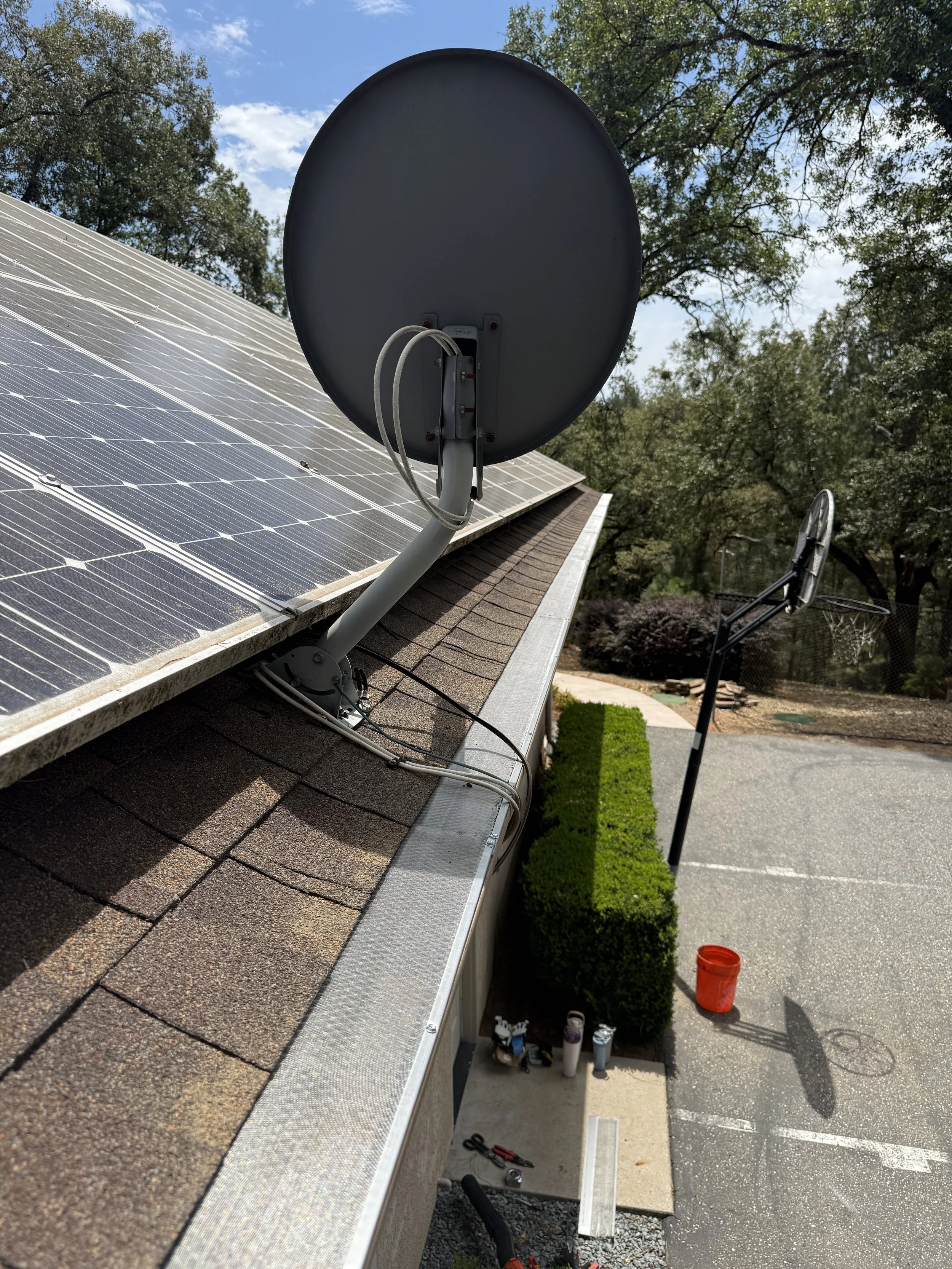
This isn't a normal fall. NOAA is giving the developing El Niño a greater than 90% chance of becoming very strong through fall and winter, with a 75% chance it becomes the strongest on record dating back to 1950. Governor Newsom declared a statewide emergency on September 21 to get California ready. Above-normal rainfall is favored across the state starting in October and running straight through spring.
Translation for homeowners around Auburn and the Placer County foothills: your gutters are about to get tested harder than they have in years. The time to find out whether they're ready is now, while it's still dry — not during the first atmospheric river. You don't need a rainy day to spot trouble. Here's what to look for from the ground.
1. Debris is visible above the gutter edge
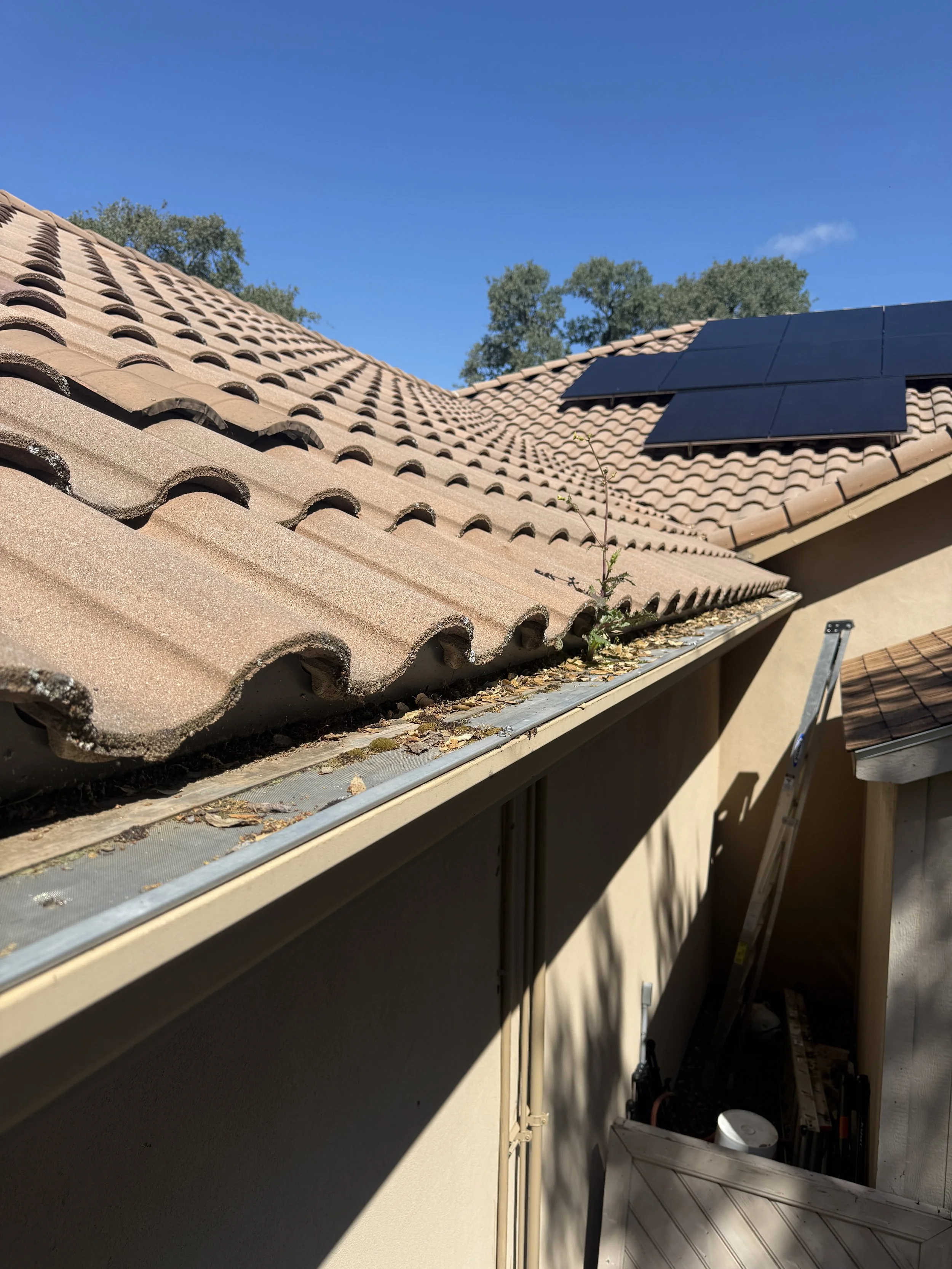
Leaves, pine needles, or twigs sticking out of the gutter are the clearest reason to get it checked. And what you can see from below is usually just the top layer — foothill debris mats down into a dense, compacted layer underneath, especially pine needles and oak leaves. That matted layer is what blocks outlets and downspouts when the first heavy rain hits.
2. There are streaks below the gutter line
Dark streaking on the gutter face or the siding underneath — sometimes called tiger striping — means water has already escaped where it shouldn't. A clog is one possibility, but leaking joints or gutter sections that have shifted out of alignment leave the same marks. The stain tells you water went the wrong way; the cause is what actually needs fixing.
3. A section looks low or is pulling away
Stand back and sight down the gutter line. If a section sags, tilts, or looks separated from the roofline, don't just assume it's the weight of debris — though wet, compacted debris is genuinely heavy. Damaged hangers, rotted fascia, or alignment problems may be involved too. Cleaning clears the channel; it doesn't reattach the gutter. These are two different jobs, and both matter before a winter like the one coming.
4. The downspout outlet is buried
Check the bottom of every downspout. Leaves, soil, and mulch build up around outlets fast in the fall, and if the downspout ties into an underground drain, a blockage farther along the line affects everything above it. An open gutter channel doesn't help if the water has nowhere to go when it leaves the downspout. In a winter with repeated rounds of heavy rain, the discharge point matters as much as the gutter itself.
5. It overflowed last time and nobody's looked at it since
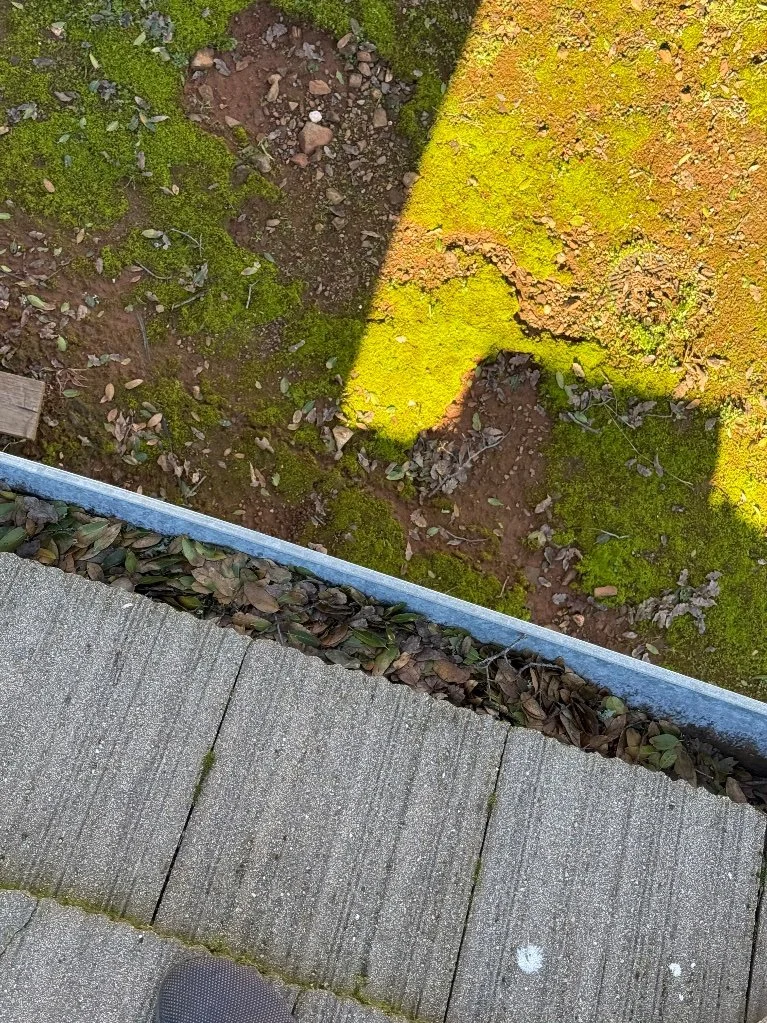
If you saw water spilling over the edge during rain earlier this year, don't assume the problem cleared itself. Note which section it was — that detail tells us exactly where to look. Overflow that keeps happening in the same spot after a cleaning usually means the issue is alignment, damage, or capacity, not just debris.
What to do before the storms arrive
If any of this sounds familiar, get the gutters cleaned now, while scheduling is still open — once the rain starts, everybody calls at once. If you're tired of the twice-a-year cycle, this is also the right moment to talk about gutter guards: they keep the big debris out so the system handles heavy water flow the way it's supposed to. And if your home sits under serious tree cover, a maintenance plan means the gutters get checked on a schedule instead of whenever someone happens to notice a problem.
One honest note: even a perfect cleaning today doesn't guarantee a clear system in January. Homes under trees collect fresh debris all season, and this winter is forecast to bring more of everything. The goal isn't to clean once and forget it — it's to go into storm season with a system you know is working.
If you're in Auburn or the surrounding foothill areas and you want a straight answer on what your gutters look like, reach out. We'll take a look, tell you what we're seeing, and give you a clear quote — no pressure, no upsell theater.